
Books by Hunter Hastings
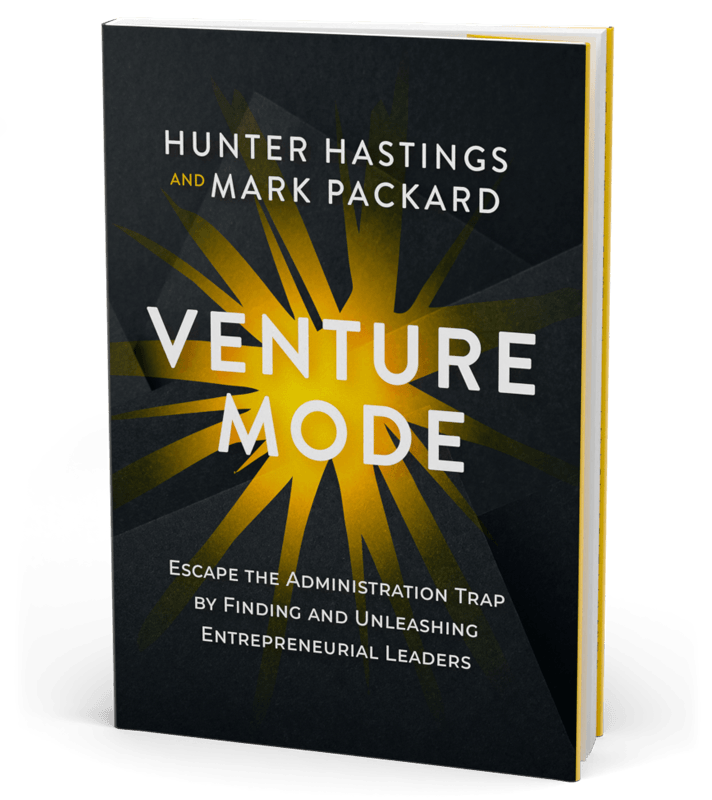
Venture Mode
Venture Mode is a bold call for an overhaul of modern business leadership and the higher education system that staffs it.
It exposes the bureaucratic mindset that dominates modern organizations—especially universities—and explains the true cost of our obsession with administration in the form of suppressed economic potential. In its place, Hunter Hastings and Mark Packard champion venture mode: a radical, entrepreneurial approach that prioritizes value creation, consumer sovereignty, and agile execution.
Whether you’re a founder, an executive, or a rebel within a legacy system, this book is a call to arms. If you’re tired of the inertia of traditional business thinking and its MBA-fueled administrative mindset, then Venture Mode is your new manual—showing you how to train, nurture, and unleash entrepreneurial leaders to fuel a thriving business. The world doesn’t need more administrators. It needs entrepreneurs.

The Post-Managerial Era of Capitalism
Traditional business management was the machinery of control for industrial organizations that had sprawled beyond the oversight of their founders, an organizational innovation that became a profession and a science.
The aim was the stability and predictability the financial sector demanded. But control brought increasing costs: (1) slow response to market changes, leaving established firms behind innovative newcomers; (2) bureaucratic inertia that strangled flexibility; (3) disengaged employees who felt their creativity and agility stifled. These failures weakened firms and lowered economic productivity.
In the Kuhnian framework of scientific revolutions, the management paradigm entered crisis mode. Consistent with the Kuhnian framing, businesses are moving beyond management. Self-organization and enterprise flow are revolutionizing business models.
Interconnected ecosystems replace bounded industries. Experimentation and feedback replace traditional strategic planning. Dynamic, autonomous teams replace hierarchies of authority.
Liberated companies embrace dynamic cohesion rather than the rigidities of business administration. They operate in a post-managerial era.

Aberrant Capitalism: The Decay and Revival of Customer Capitalism (Elements in Reinventing Capitalism)
The corporation was a timely emergent phenomenon of the capitalist system. Under entrepreneurial ownership with customer value creation goals, corporations introduced new products and services, new capital structures and new management processes capable of improving customer experiences in every facet of their lives. After entrepreneurship, the organizational model transitioned to managerial capitalism, and from there into command-and-control and central planning.
Then came further transition into the era of financialization, where shareholder value replaced customer value as the purpose of the corporation. Managers diverted resources to their own enrichment as well as that of shareholders, at the expense of investment in future innovation. Capitalism's reputation has become tarnished and its purpose distorted.
This Element ends with the promise of another emergent era, via the corporations of the digital age.
Austrian Economics In Contemporary Business Applications: Think Better, Think Austrian
Many are questioning the way business is taught in business schools as a positivist, mathematicized science. The perspectives of Austrian economics offer a completely different view. Principles of Austrian economics, including, but not limited to, subjective value, consumer sovereignty, entrepreneurship, time preference, and capital theory open up pathways for innovative business thinking. These pathways penetrate strategy, finance, marketing, organizational design, and the broad swath of business management. This book provides insights from six of the leading thinkers of the new wave of business education.
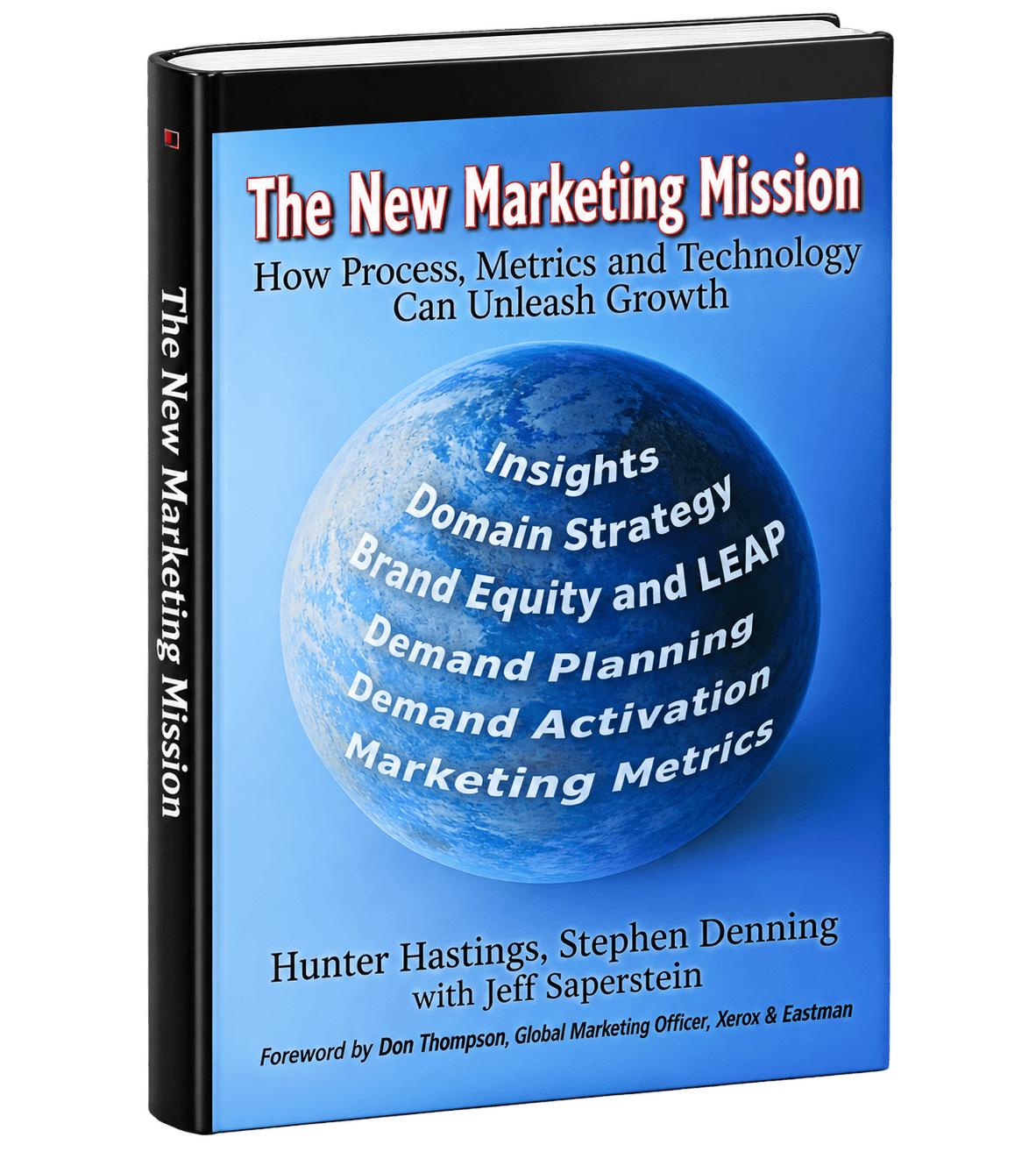
The New Marketing Mission: How Process, Metrics, and Technology Can Unleash Growth
Brand building is the heart of value creation for the 21st century corporation. The EMM Group authors have taken the mystery out of brand building and replaced it with process, metrics, and tools that any company can master. The book is designed to improve organizational and professional marketing management practices for brand value creation and enhancement.
Why can these advances be adopted today? Because rapid advances in information technology now enable marketing to be engineered and measured for accountable investment in ways previously impossible. This new capability redefines the role of the marketing director in a profound way.
Now senior management can hold marketing accountable just like other items on the P&L because real metrics will be available to evaluate its progress.
Service Thinking: The Seven Principles to Discover Innovative Opportunities
This book will introduce you to Service Science, Management and Engineering (SSME)–a term introduced by IBM to describe service science, which is the application of science, management, and engineering disciplines to tasks that one organization beneficially performs for and with another. The authors detail the disciplines, principles, insights and tools of SSME that are now ready to transition to the mainstream business world with transformative effect. They coin the new term ‘Service Thinking’ to communicate this mainstream business transformation. It includes expository case histories of the service thinking-based transformation of familiar businesses, illustrating the seven principles of service thinking, with compelling examples and clear direction for application.
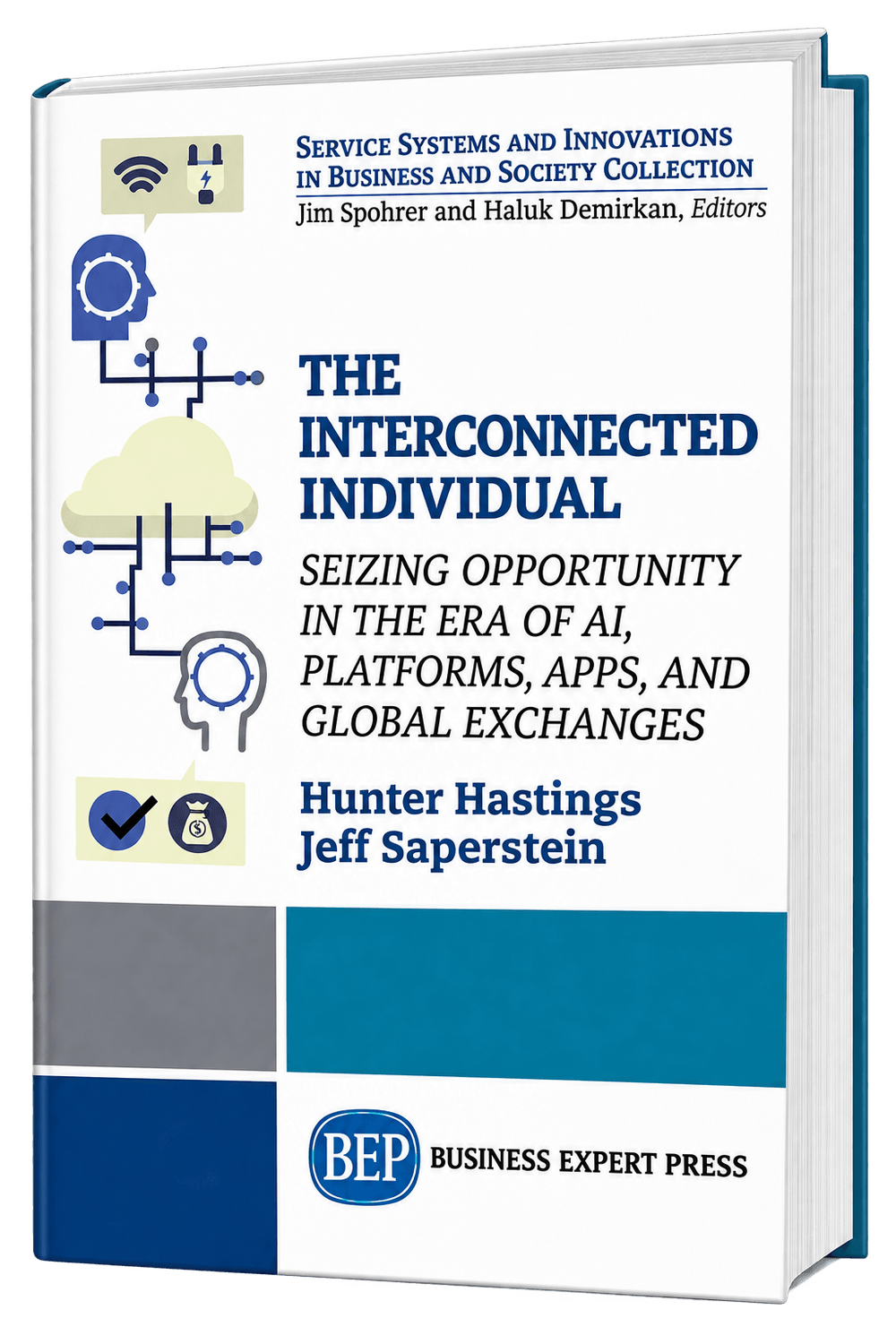
The Interconnected Individual: Seizing Opportunity in the Era of AI, Platforms, Apps, and Global Exchanges
Given the rapid technological, organizational, and structural changes that challenge conventional institutions and economies, what is the future of work? The authors propose a path to seize opportunity for the individual worker and entrepreneur, who can be newly interconnected and augmented by emerging technologies. Values-based individual career and business navigation can thrive and succeed; teams, groups, and networks can be enhanced with a new mode of innovation based on social conversation and connection rather than a commercial, hierarchical, and prescriptive process.
The authors provide visual models, case studies, and in- depth interviews with cutting-edge practitioners, who provide insights from real-world experience. The Interconnected Individual is intended to help business and professional executives and freelance workers to adopt an entrepreneurial mind-set, regardless of field, industry, or work role.
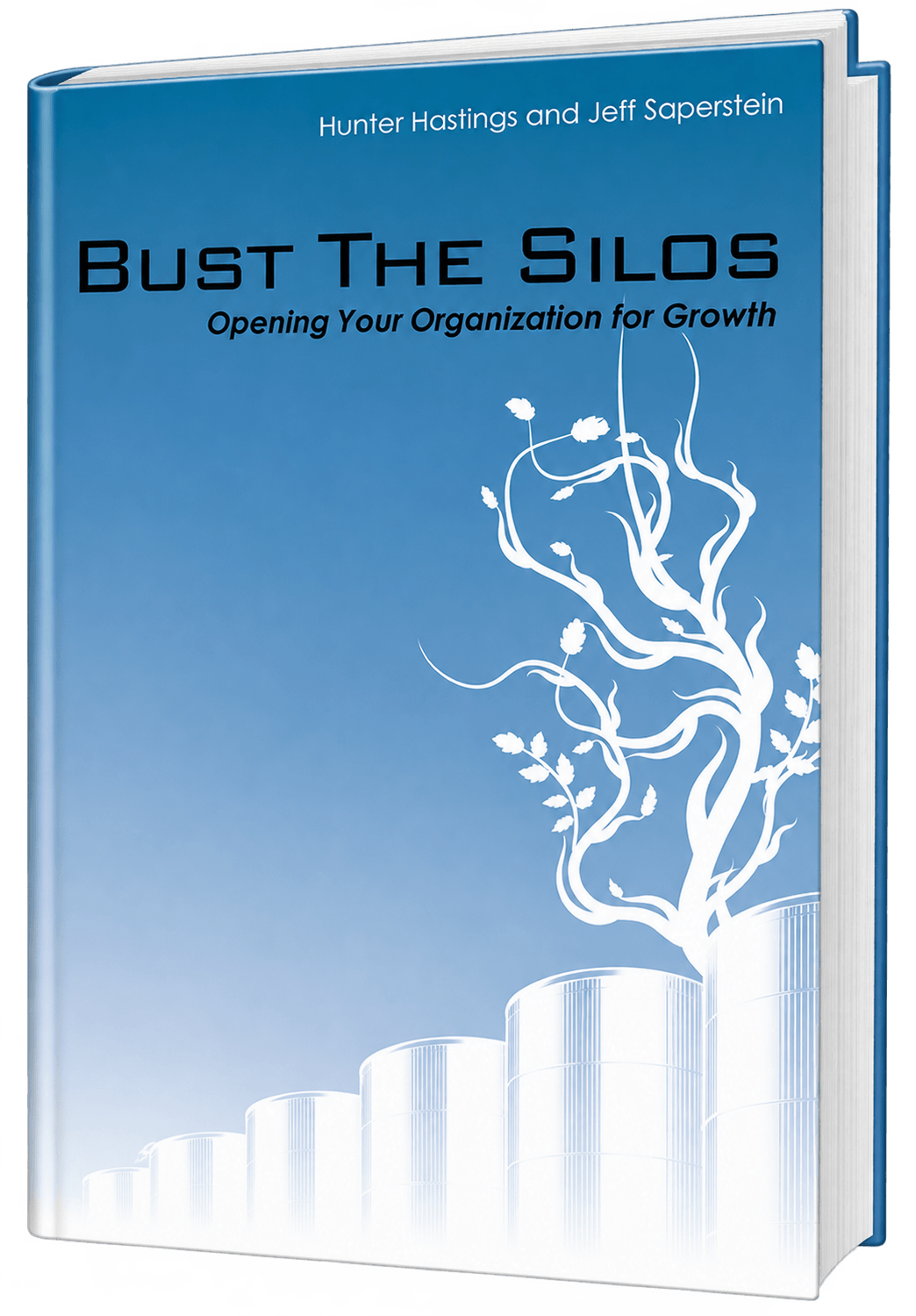
Bust the Silos: Opening Your Organization for Growth
Bust the Silos: Opening Your Organization for Growth by Hunter Hastings and Jeff Saperstein presents shifting new paradigm for growth in today’s global economy -Demand Creation. Using examples of companies who are implementing Demand Creation principles to innovate and grow their businesses today, the authors explain how any company can adapt, innovate, and compete more effectively on a global scale. Their Demand Creation methodology is proven, empirically based, and repeatable. Inside this text authors Hastings and Saperstein reveal:
• Why Demand Creation is the next paradigm for organic organizational growth.
• How long-established companies with legacy systems create structural and cultural barriers that make Demand Creation adoption more difficult than in newer companies.
• The essential role of senior management in Demand Creation adoption.
• How Demand Creation can be applied to brand building through the application of process and cross-functional integration.
The Post-Managerial Era of Capitalism
Traditional business management was the machinery of control for industrial organizations that had sprawled beyond the oversight of their founders, an organizational innovation that became a profession and a science.
The aim was the stability and predictability the financial sector demanded. But control brought increasing costs: (1) slow response to market changes, leaving established firms behind innovative newcomers; (2) bureaucratic inertia that strangled flexibility; (3) disengaged employees who felt their creativity and agility stifled. These failures weakened firms and lowered economic productivity.
In the Kuhnian framework of scientific revolutions, the management paradigm entered crisis mode. Consistent with the Kuhnian framing, businesses are moving beyond management. Self-organization and enterprise flow are revolutionizing business models.
Interconnected ecosystems replace bounded industries. Experimentation and feedback replace traditional strategic planning. Dynamic, autonomous teams replace hierarchies of authority.
Liberated companies embrace dynamic cohesion rather than the rigidities of business administration. They operate in a post-managerial era.
Aberrant Capitalism: The Decay and Revival of Customer Capitalism (Elements in Reinventing Capitalism)
The corporation was a timely emergent phenomenon of the capitalist system. Under entrepreneurial ownership with customer value creation goals, corporations introduced new products and services, new capital structures and new management processes capable of improving customer experiences in every facet of their lives. After entrepreneurship, the organizational model transitioned to managerial capitalism, and from there into command-and-control and central planning.
Then came further transition into the era of financialization, where shareholder value replaced customer value as the purpose of the corporation. Managers diverted resources to their own enrichment as well as that of shareholders, at the expense of investment in future innovation. Capitalism's reputation has become tarnished and its purpose distorted.
This Element ends with the promise of another emergent era, via the corporations of the digital age.
Austrian Economics In Contemporary Business Applications: Think Better, Think Austrian
Many are questioning the way business is taught in business schools as a positivist, mathematicized science. The perspectives of Austrian economics offer a completely different view. Principles of Austrian economics, including, but not limited to, subjective value, consumer sovereignty, entrepreneurship, time preference, and capital theory open up pathways for innovative business thinking.
These pathways penetrate strategy, finance, marketing, organizational design, and the broad swath of business management. This book provides insights from six of the leading thinkers of the new wave of business education.
The New Marketing Mission: How Process, Metrics, and Technology Can Unleash Growth
Brand building is the heart of value creation for the 21st century corporation. The EMM Group authors have taken the mystery out of brand building and replaced it with process, metrics, and tools that any company can master. The book is designed to improve organizational and professional marketing management practices for brand value creation and enhancement.
Why can these advances be adopted today? Because rapid advances in information technology now enable marketing to be engineered and measured for accountable investment in ways previously impossible. This new capability redefines the role of the marketing director in a profound way.
It places him/her at the heart of the corporation's purpose-building the brand and delivering the bottom line with true accountability and the credibility not accorded the marketing function when it was perceived as an arcane art and unreliable process. This will enhance the ability if the CEO, CFO, and COO to leverage marketing to create shareholder value.
Now senior management can hold marketing accountable just like other items on the P&L because real metrics will be available to evaluate its progress.
Service Thinking: The Seven Principles to Discover Innovative Opportunities
Business paradigm shifts are rare. However, the shift to a services-dominant economy and to services-dominant value creation genuinely merits the designation. Almost 80% of GDP in developed economies is attributable to services, and some economists regard products as merely the physical embodiment of service delivery.
This is a must-read for anyone trained in traditional process improvement or business architecture. In surprisingly clear language this book lays out the essentials of service thinking, and how the service paradigm transforms the way in which organizations innovate on behalf of their customers. It shifts the focus from product to experience, from one-sided production to co-creation of value, from the simply measurable to the emotional. I intend to buy a copy for every member of my team–Dart Lindsley, Cisco Sr. Manager of Transformation Planning and Analysis.
This book will introduce you to Service Science, Management and Engineering (SSME)–a term introduced by IBM to describe service science, which is the application of science, management, and engineering disciplines to tasks that one organization beneficially performs for and with another. The authors detail the disciplines, principles, insights and tools of SSME that are now ready to transition to the mainstream business world with transformative effect. They coin the new term ‘Service Thinking’ to communicate this mainstream business transformation. It includes expository case histories of the service thinking-based transformation of familiar businesses, illustrating the seven principles of service thinking, with compelling examples and clear direction for application.
The Interconnected Individual: Seizing Opportunity in the Era of AI, Platforms, Apps, and Global Exchanges
Given the rapid technological, organizational, and structural changes that challenge conventional institutions and economies, what is the future of work? The authors propose a path to seize opportunity for the individual worker and entrepreneur, who can be newly interconnected and augmented by emerging technologies. Values-based individual career and business navigation can thrive and succeed; teams, groups, and networks can be enhanced with a new mode of innovation based on social conversation and connection rather than a commercial, hierarchical, and prescriptive process.
The authors provide visual models, case studies, and in- depth interviews with cutting-edge practitioners, who provide insights from real-world experience. The Interconnected Individual is intended to help business and professional executives and freelance workers to adopt an entrepreneurial mind-set, regardless of field, industry, or work role.
Bust the Silos: Opening Your Organization for Growth
Bust the Silos: Opening Your Organization for Growth by Hunter Hastings and Jeff Saperstein presents shifting new paradigm for growth in today’s global economy -Demand Creation. Using examples of companies who are implementing Demand Creation principles to innovate and grow their businesses today, the authors explain how any company can adapt, innovate, and compete more effectively on a global scale. Their Demand Creation methodology is proven, empirically based, and repeatable. Inside this text authors Hastings and Saperstein reveal:
• Why Demand Creation is the next paradigm for organic organizational growth.
• How long-established companies with legacy systems create structural and cultural barriers that make Demand Creation adoption more difficult than in newer companies.
• The essential role of senior management in Demand Creation adoption.
• How Demand Creation can be applied to brand building through the application of process and cross-functional integration.